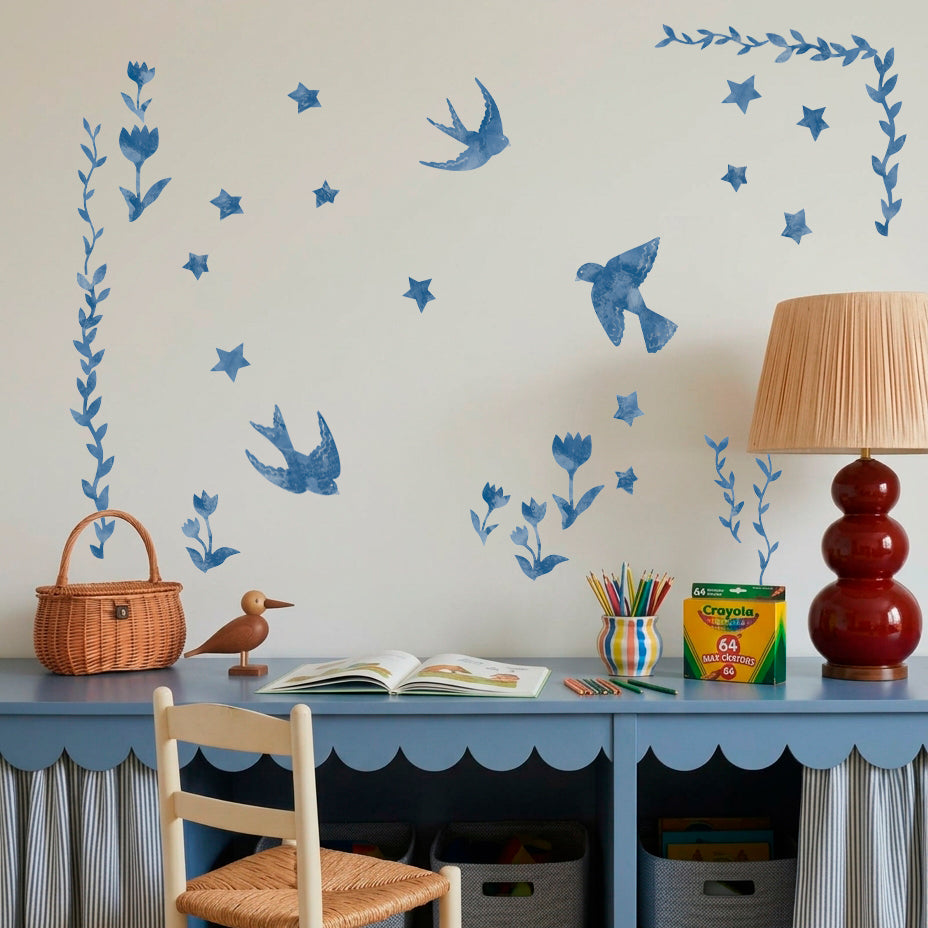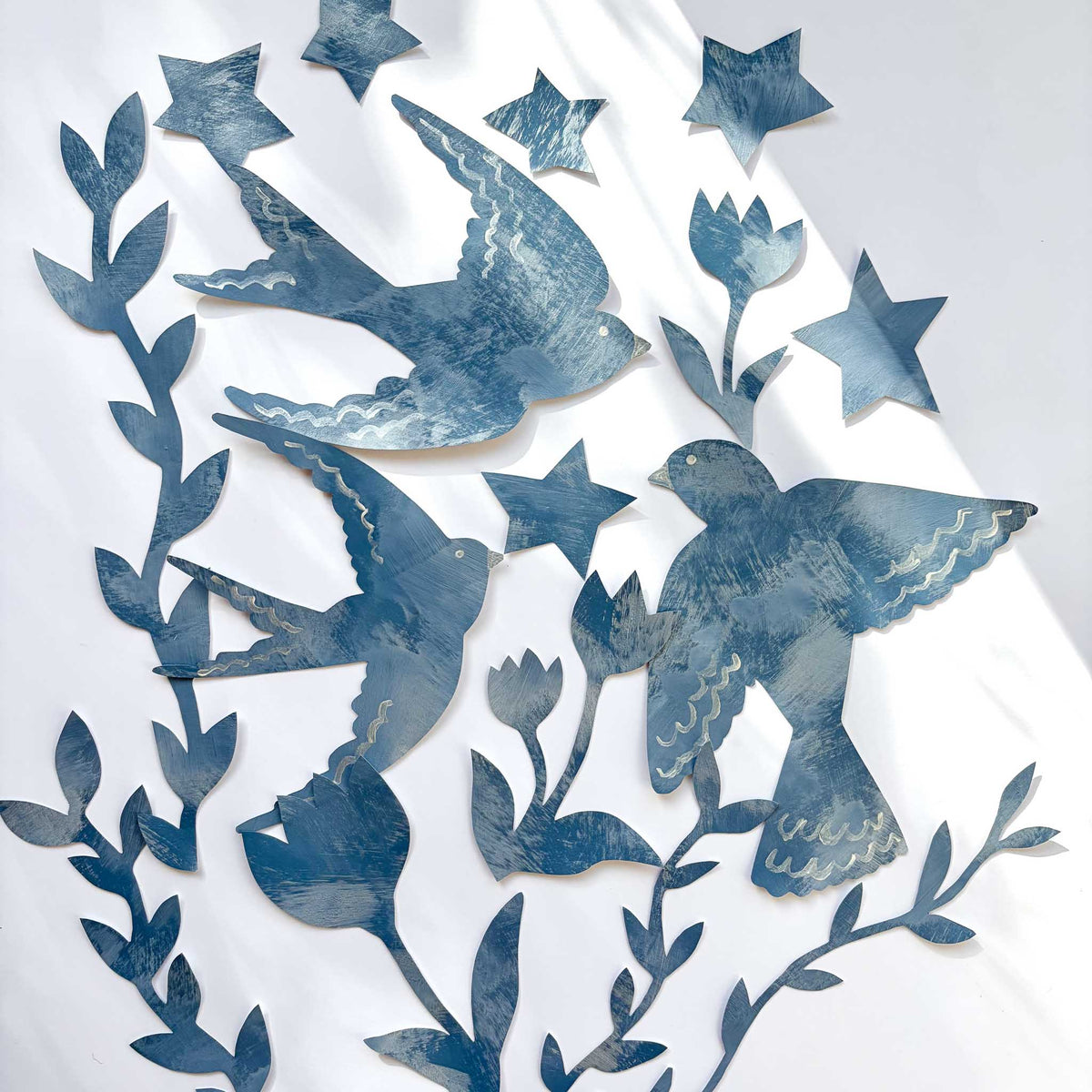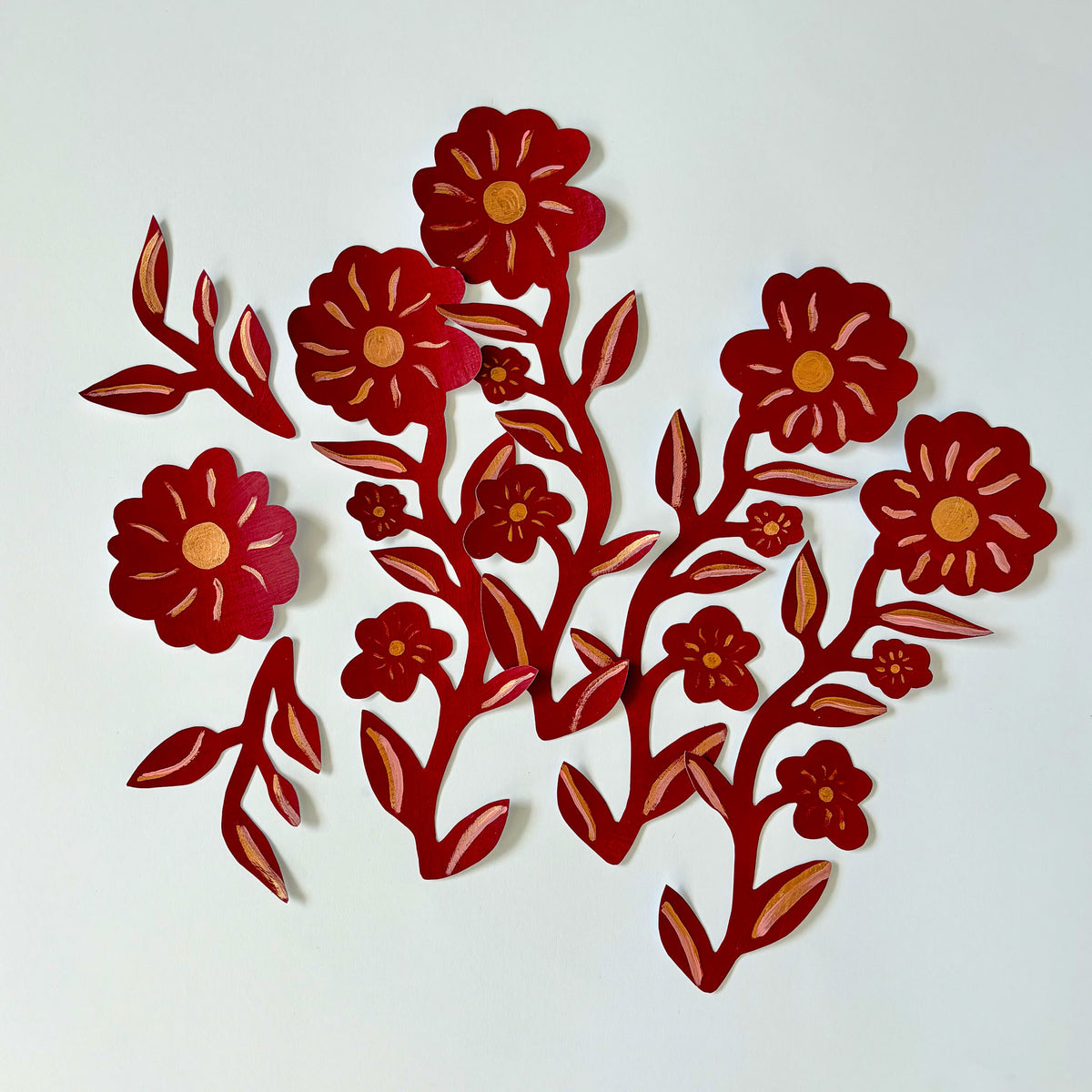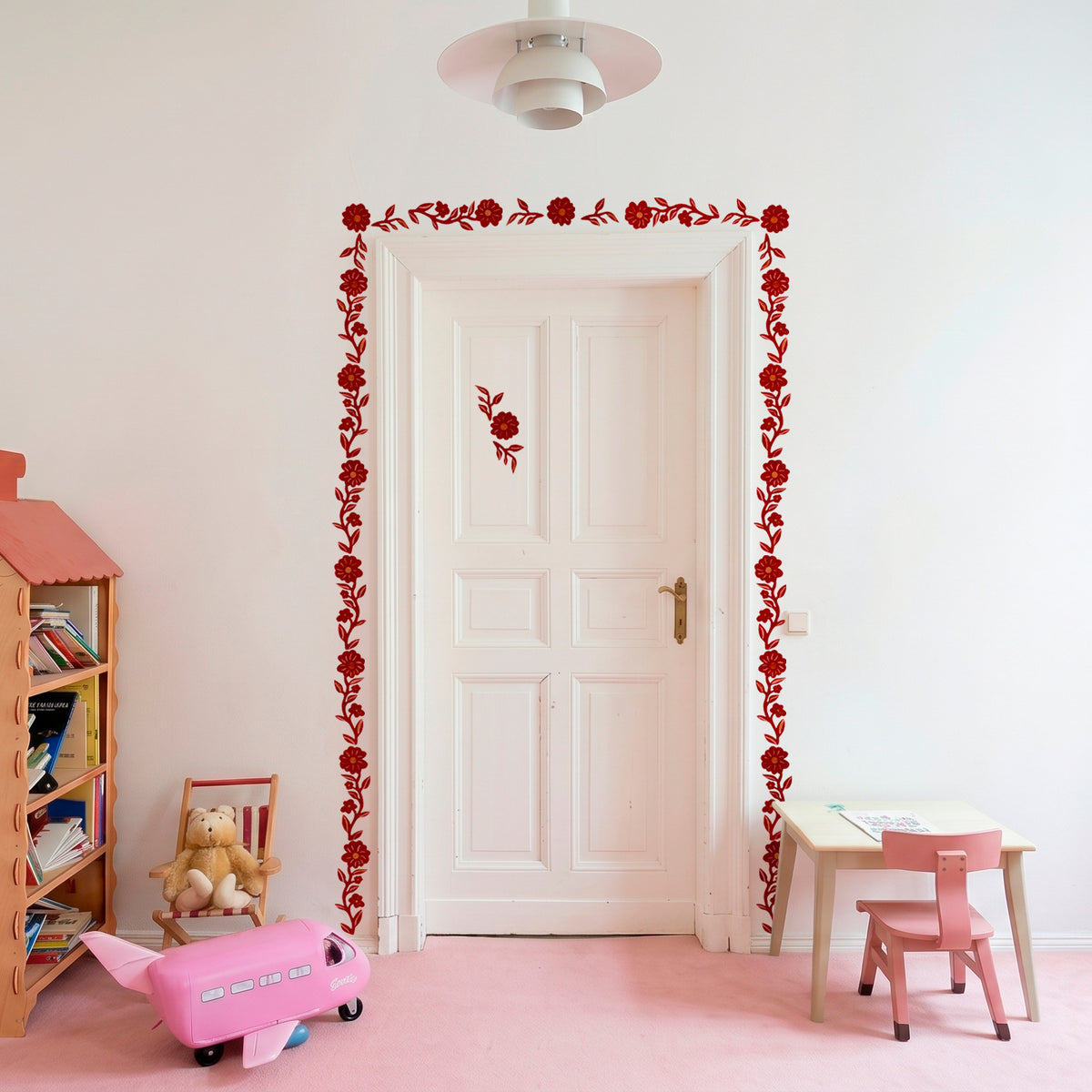

A wallpaper border does a specific job a full wall of wallpaper doesn't: it adds pattern exactly where the eye lands — above a bed, around a mirror, along a ceiling line — without asking you to commit an entire wall to it. That's the actual reason borders are worth considering again, not nostalgia for the 90s version most people remember.
What changed since the last time borders were popular
The version people remember from decades ago was usually a printed paper strip pasted at chest height or below the ceiling, running the full width of a room in one repeating pattern. It looked dated fast because it was trying to be a permanent architectural feature — a substitute for crown moulding — rather than decor. A peel-and-stick border made from individually placed, hand-painted pieces is a different object: you're not committing to a strip that runs the whole room, and you're not stuck with it once your taste changes, because it comes off clean.
Why a border instead of a full wall
Three reasons this is worth doing instead of, not just before, wallpapering a whole wall:
- It costs less material and less commitment. A border needs a fraction of the coverage a full wall does, so you can use a bolder, more expensive design without pricing yourself out of it.
- It draws the eye to a specific spot. Above a bed, around a doorframe, framing a mirror — a border directs attention exactly where you want it, which a full accent wall doesn't do as precisely.
- It's the easiest thing to defend to a landlord. A strip of pattern along one edge of a wall is visibly smaller and easier to picture removing cleanly than full coverage, which matters if you need to ask permission first.
Where a border actually works well
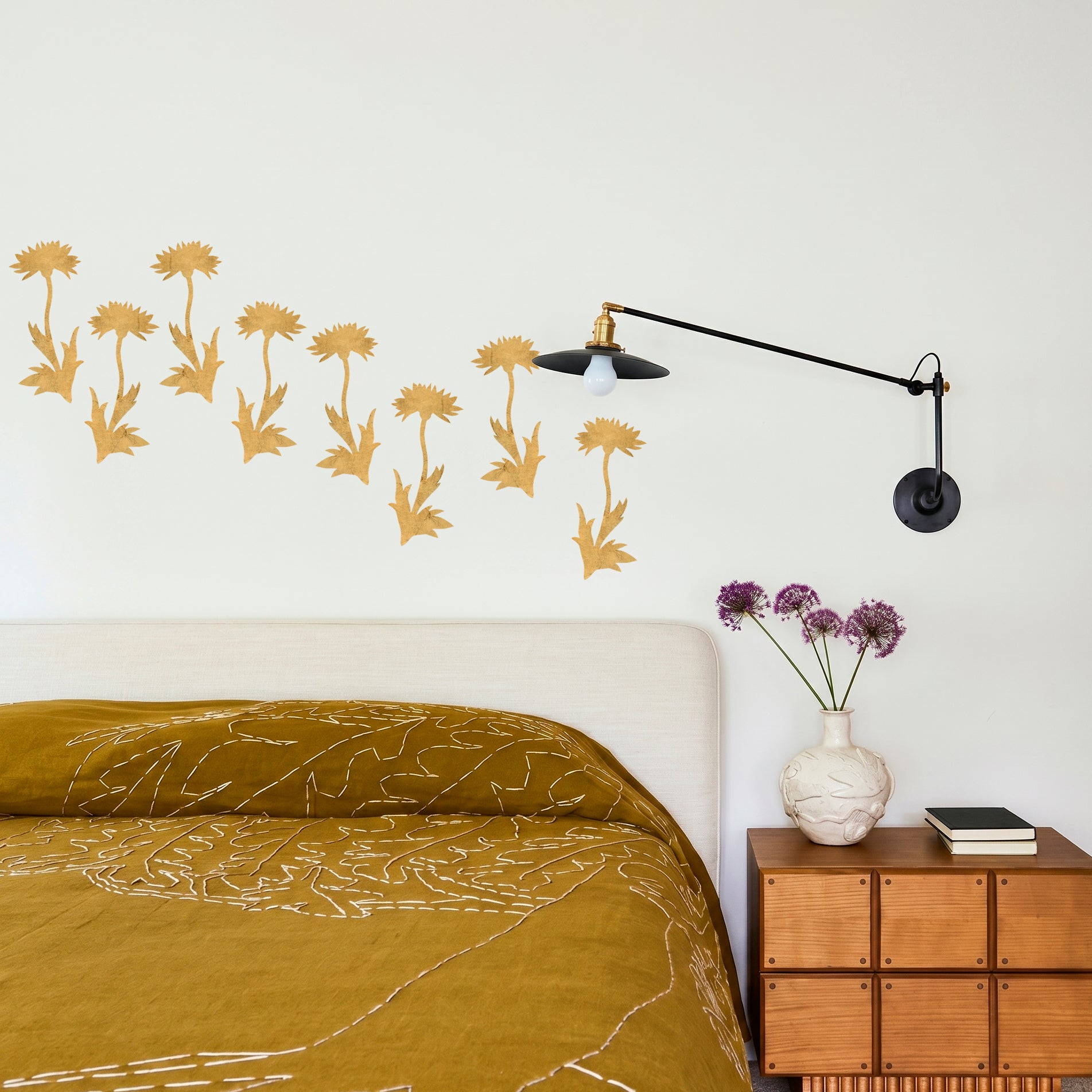
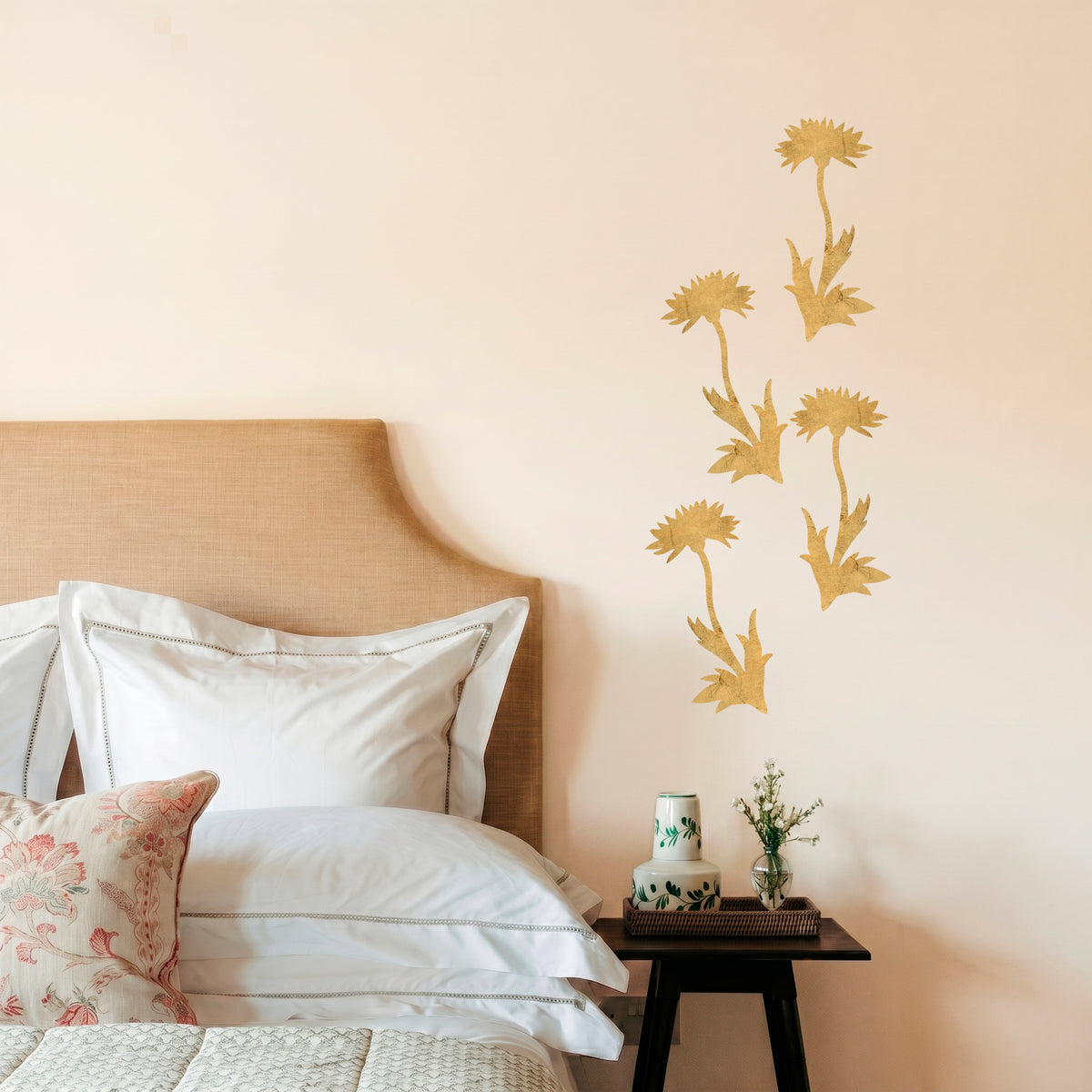
Above the headboard is the most common spot, and for good reason — it adds pattern to the one wall everyone in the room faces, without touching the rest of it. Around a doorframe or mirror is the second-best spot: it treats the frame like it's being highlighted rather than just outlined. A third option that's easy to overlook is along a shelf or the top edge of wainscoting, where a border reads as a deliberate finishing detail rather than an afterthought.
Two examples of how different a border can look
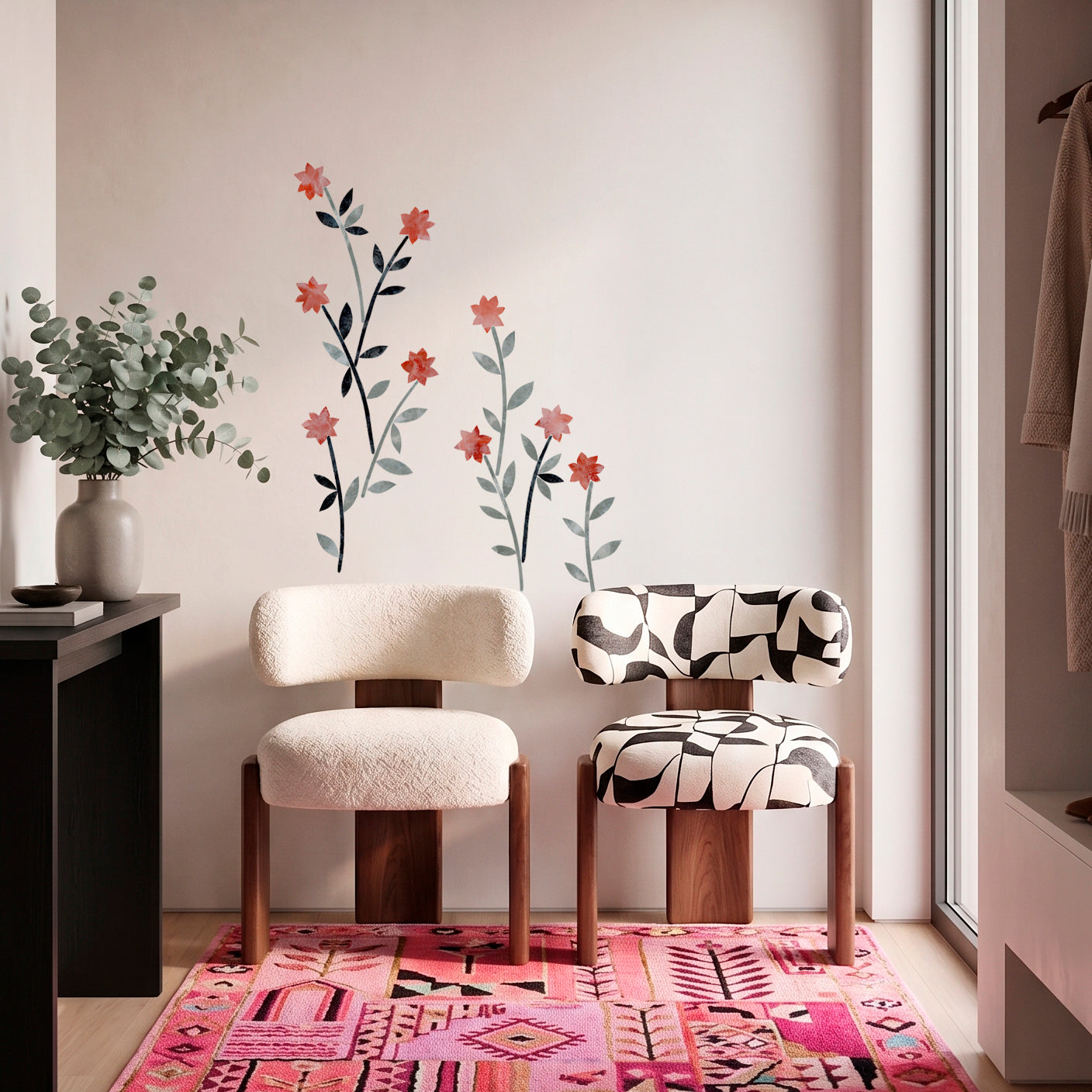
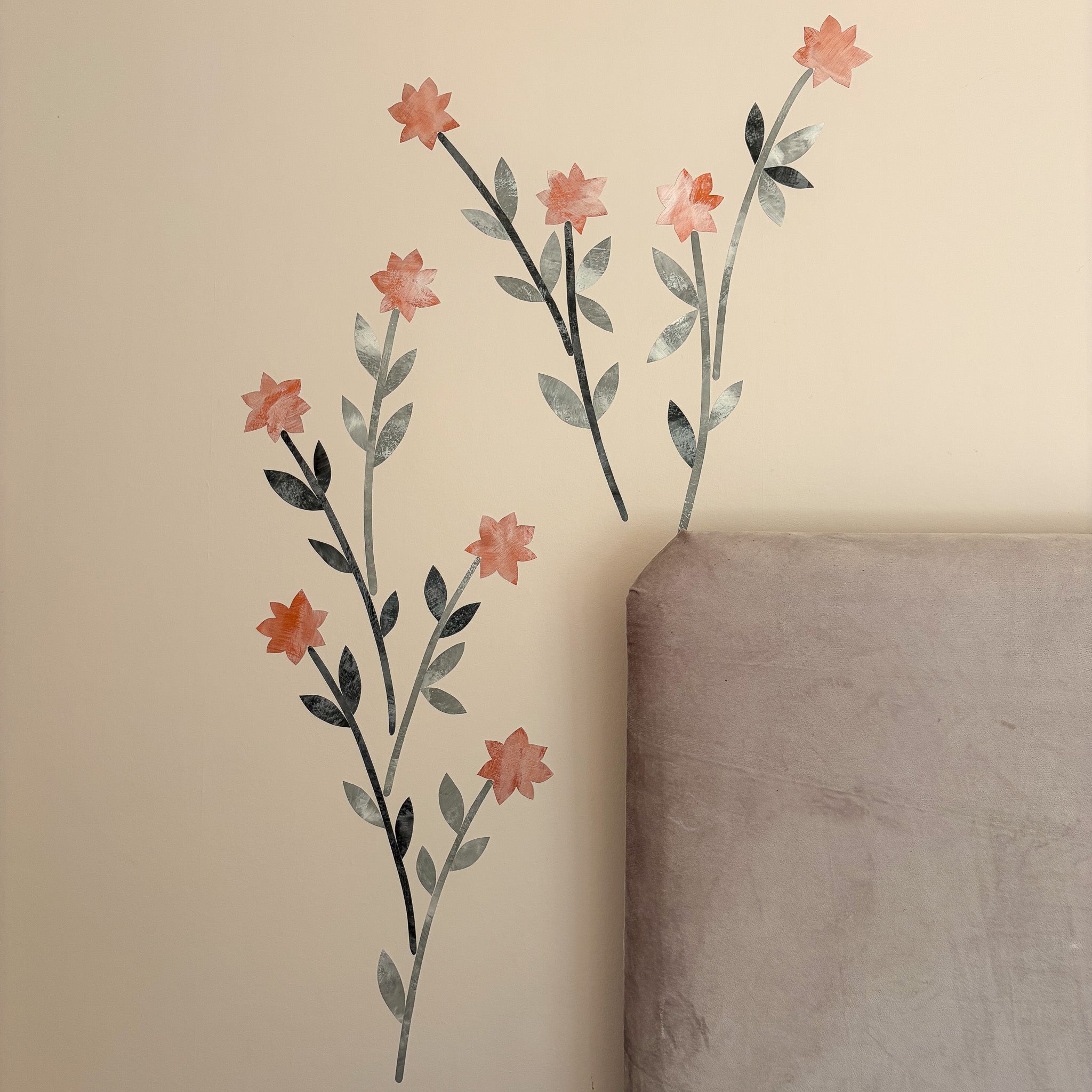
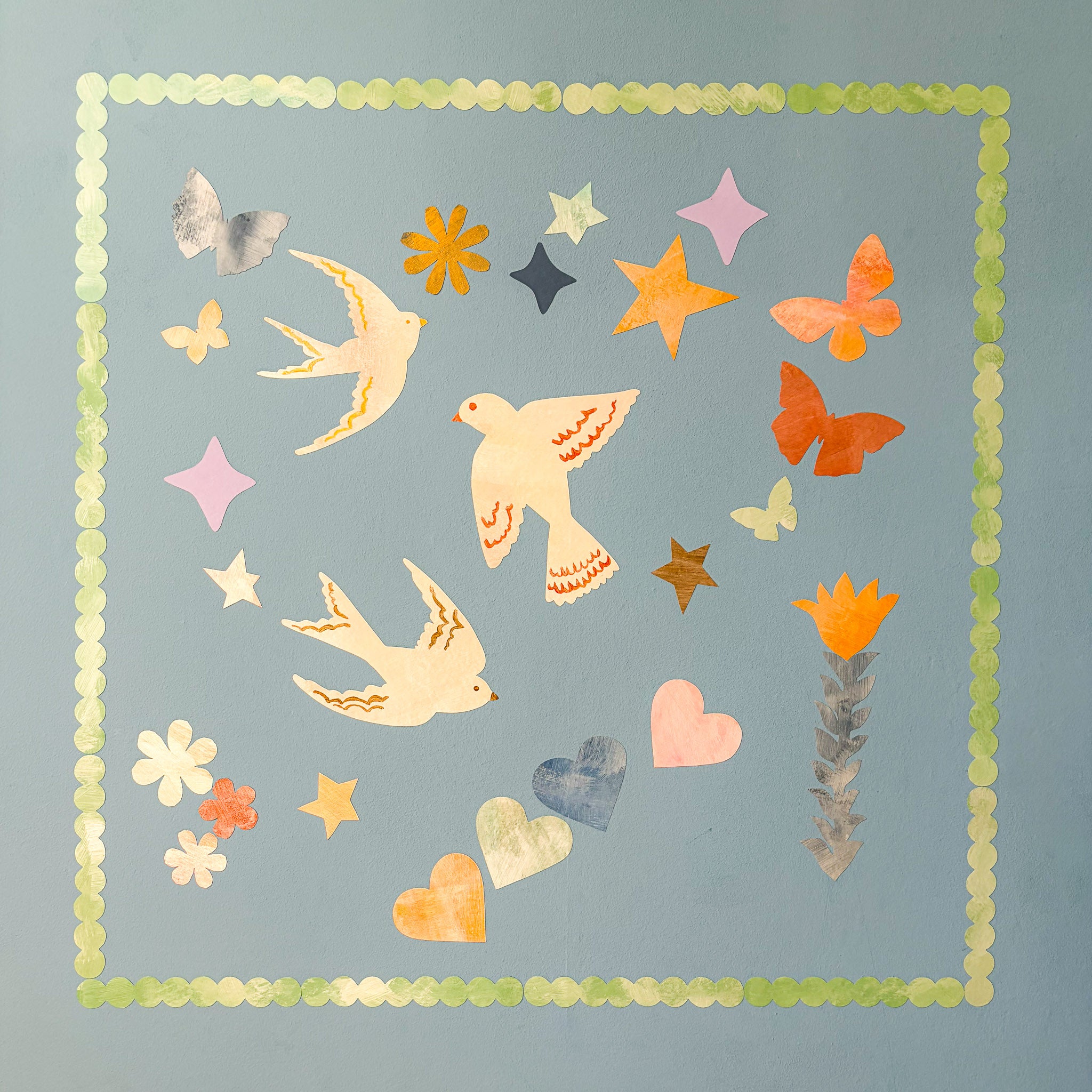
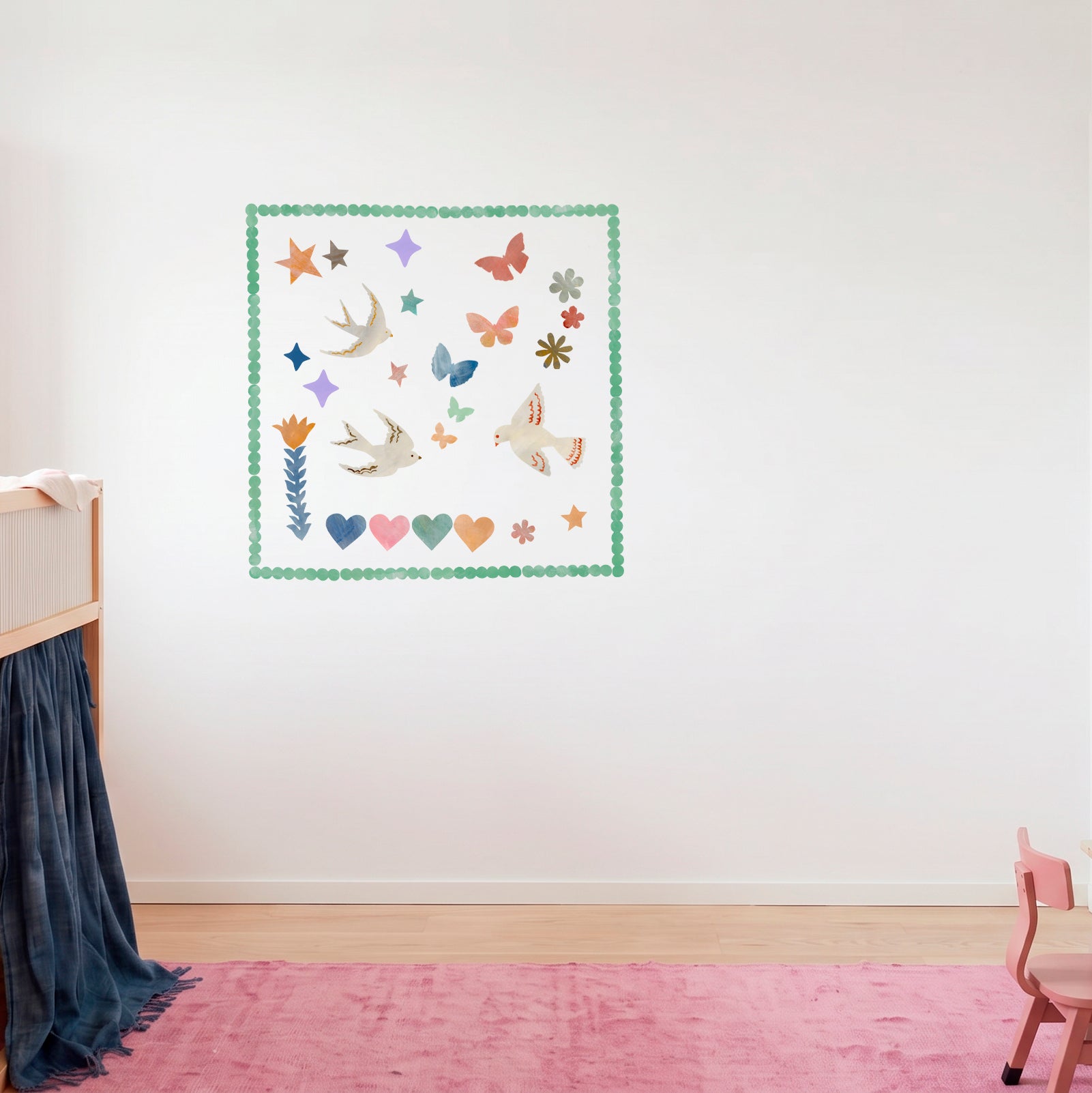
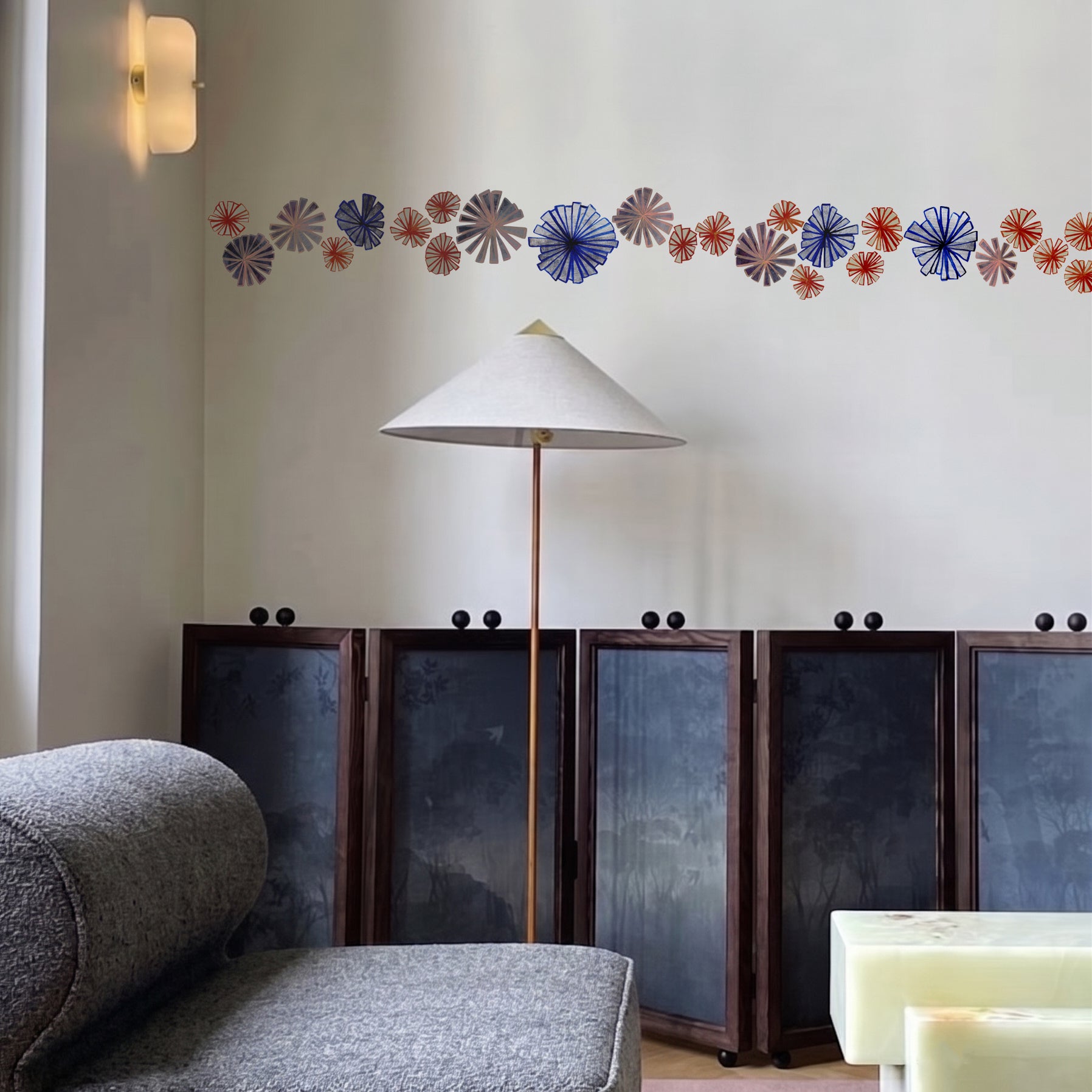
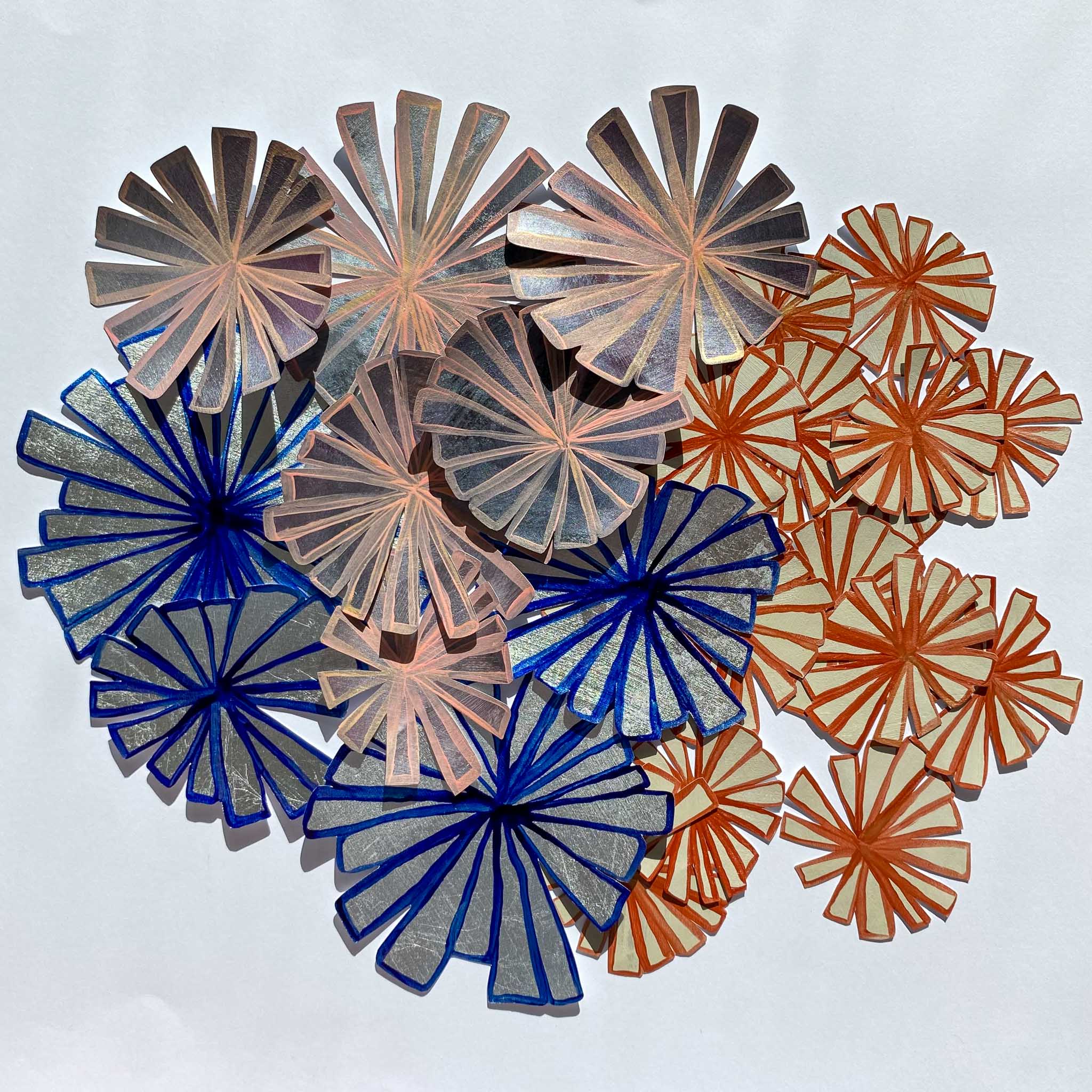
Borders aren't one style. A geometric, repeating shape reads clean and modern; a botanical, irregular shape reads softer and more organic. Here are two real examples that show the range.

Shop the look
CIRCLE wallpaper border16 hand-painted circles, 7.5cm diameter, giving you 120-240cm of border depending on spacing — a clean, geometric option, especially suited to above the bed — from 175 DKK

Shop the look
GOLD LEAF BRANCH wall decal12 hand-painted branch decals with real imitation gold leaf from Italy, ~160-200cm as a border — an organic, botanical alternative to a geometric shape — from 675 DKK
How to decide where your border goes
Stand in the room and notice where your eye actually lands first when you walk in — that's usually the spot worth bordering, whether it's a headboard, a mirror, or a doorway. Measure that specific stretch of wall before choosing a design, since the two examples above cover very different lengths: the circle border gives you 120-240cm depending on how tightly you space the individual dots, while the branch border runs 160-200cm as a continuous strip. Neither is meant to wrap a whole room — both are sized for one wall or one architectural feature at a time.
If you're deciding between several border designs and want a broader comparison of styles and sizes, that's better covered in its own roundup — this one's really about the reasoning: a border gets you real pattern, in exactly the spot that matters, without wallpapering a wall you might not want to commit to.