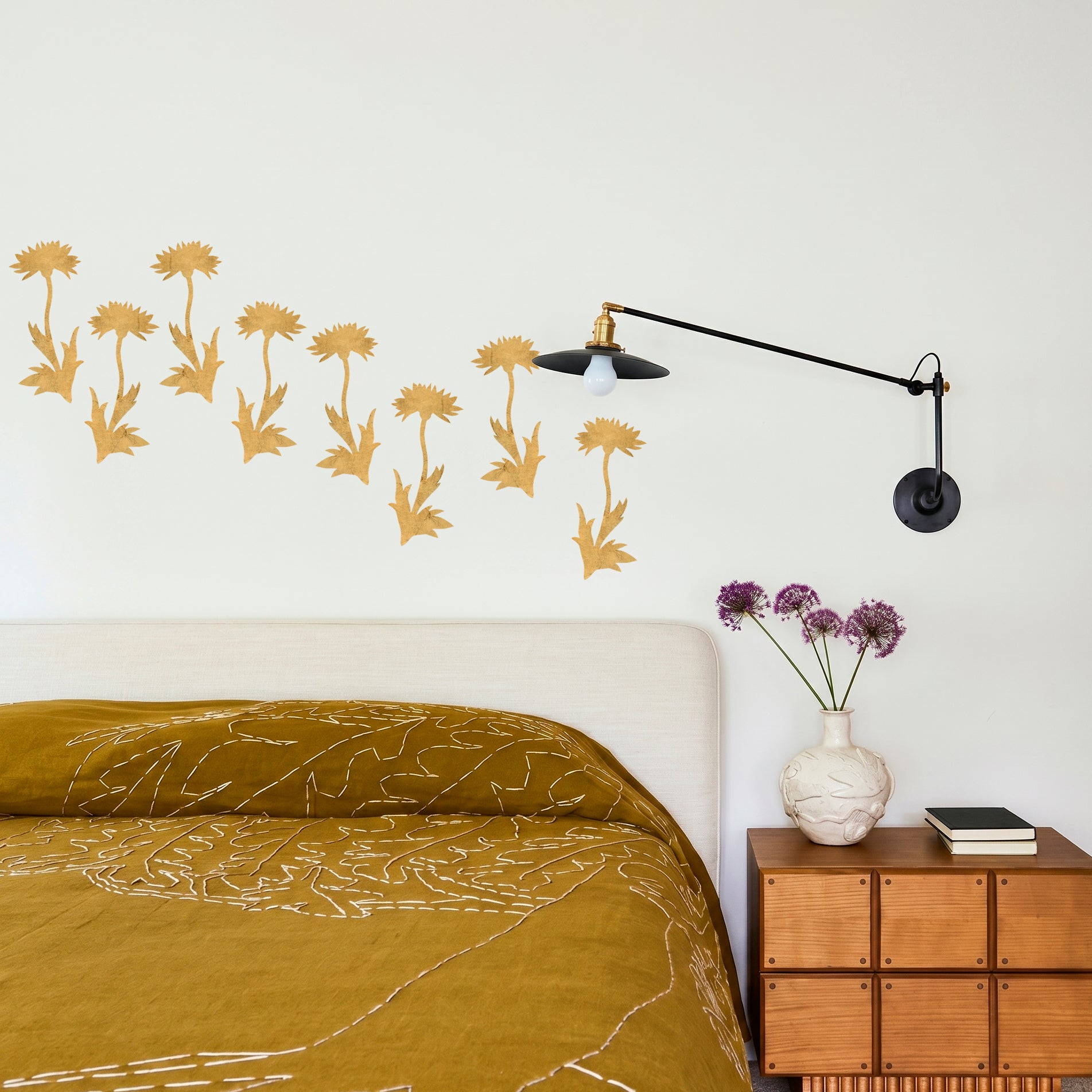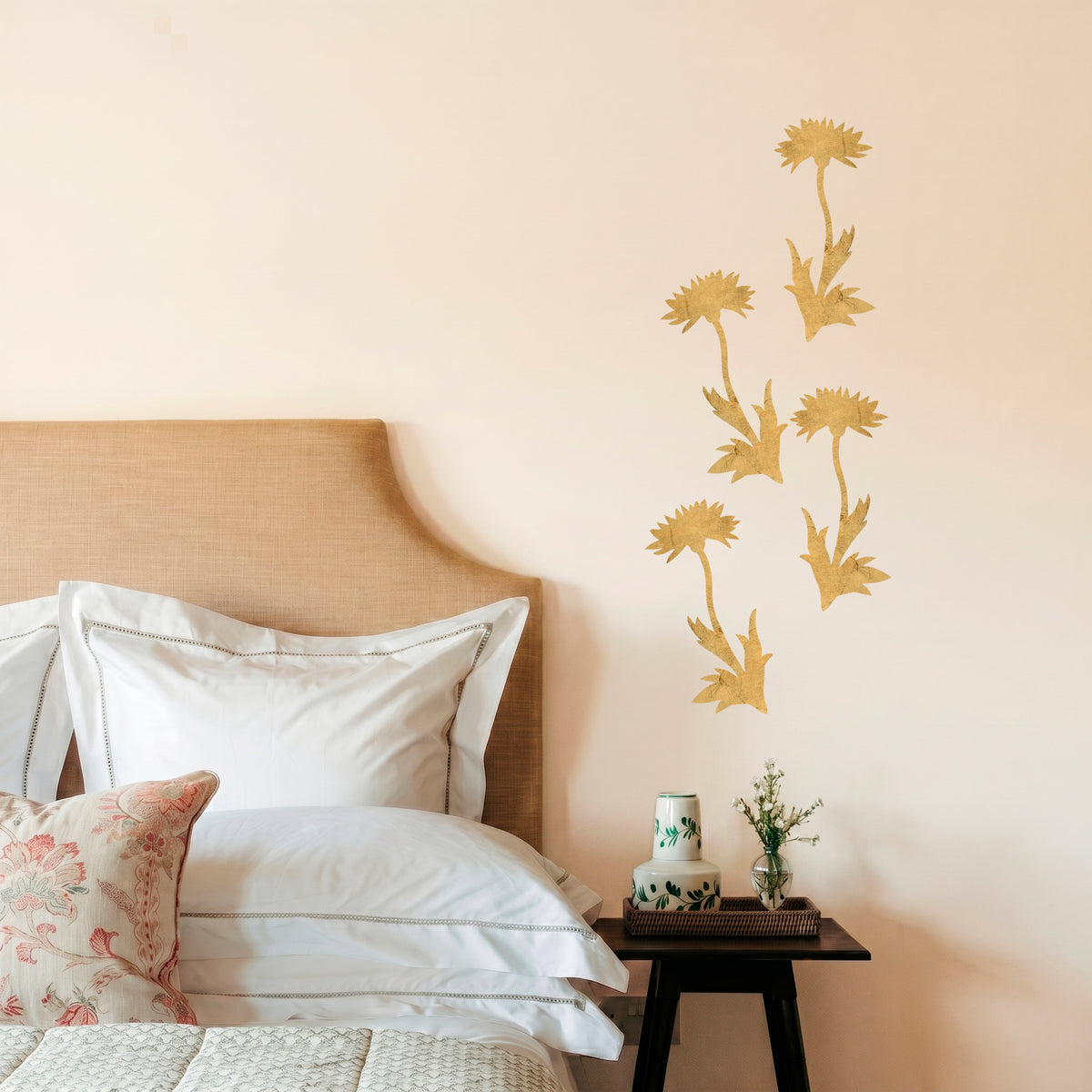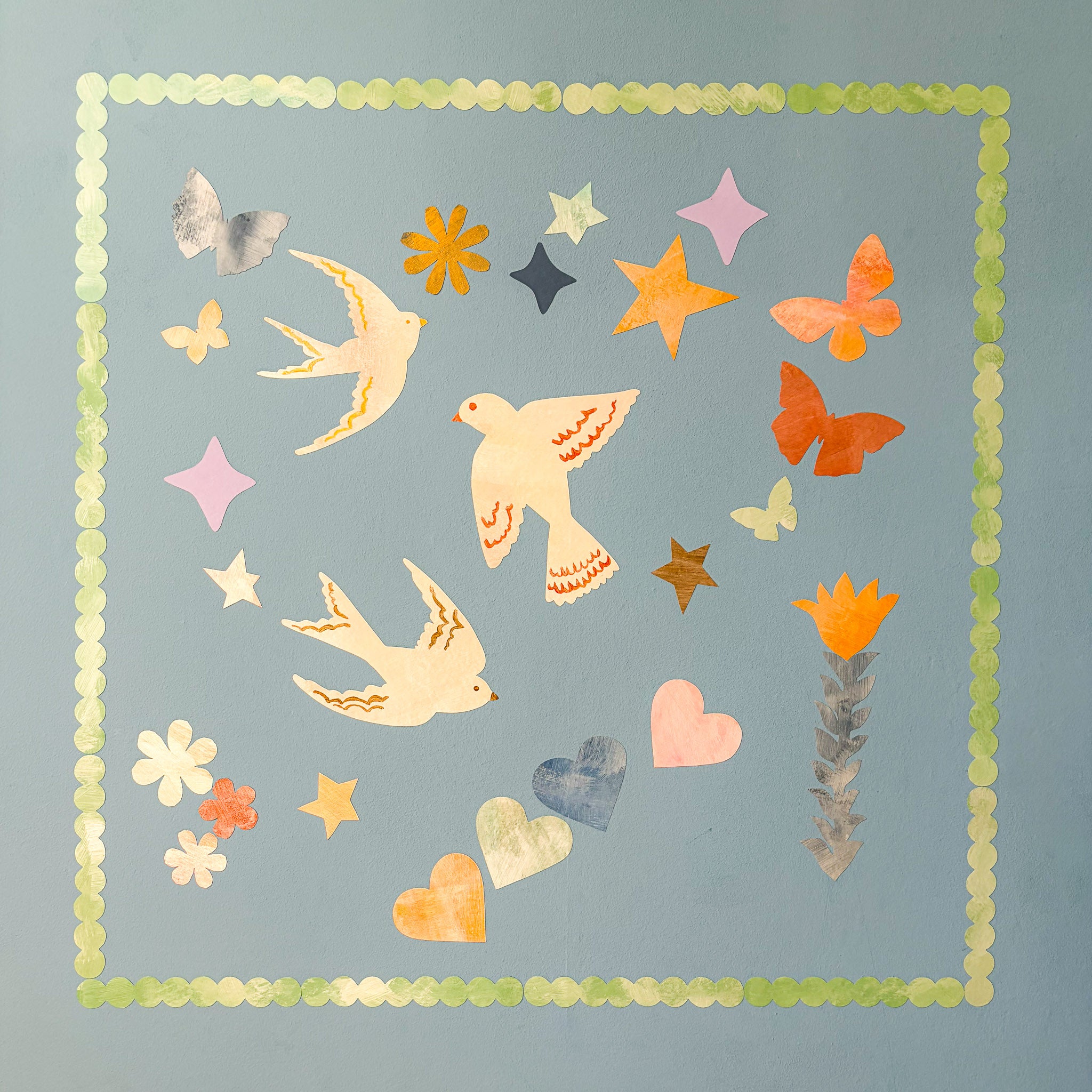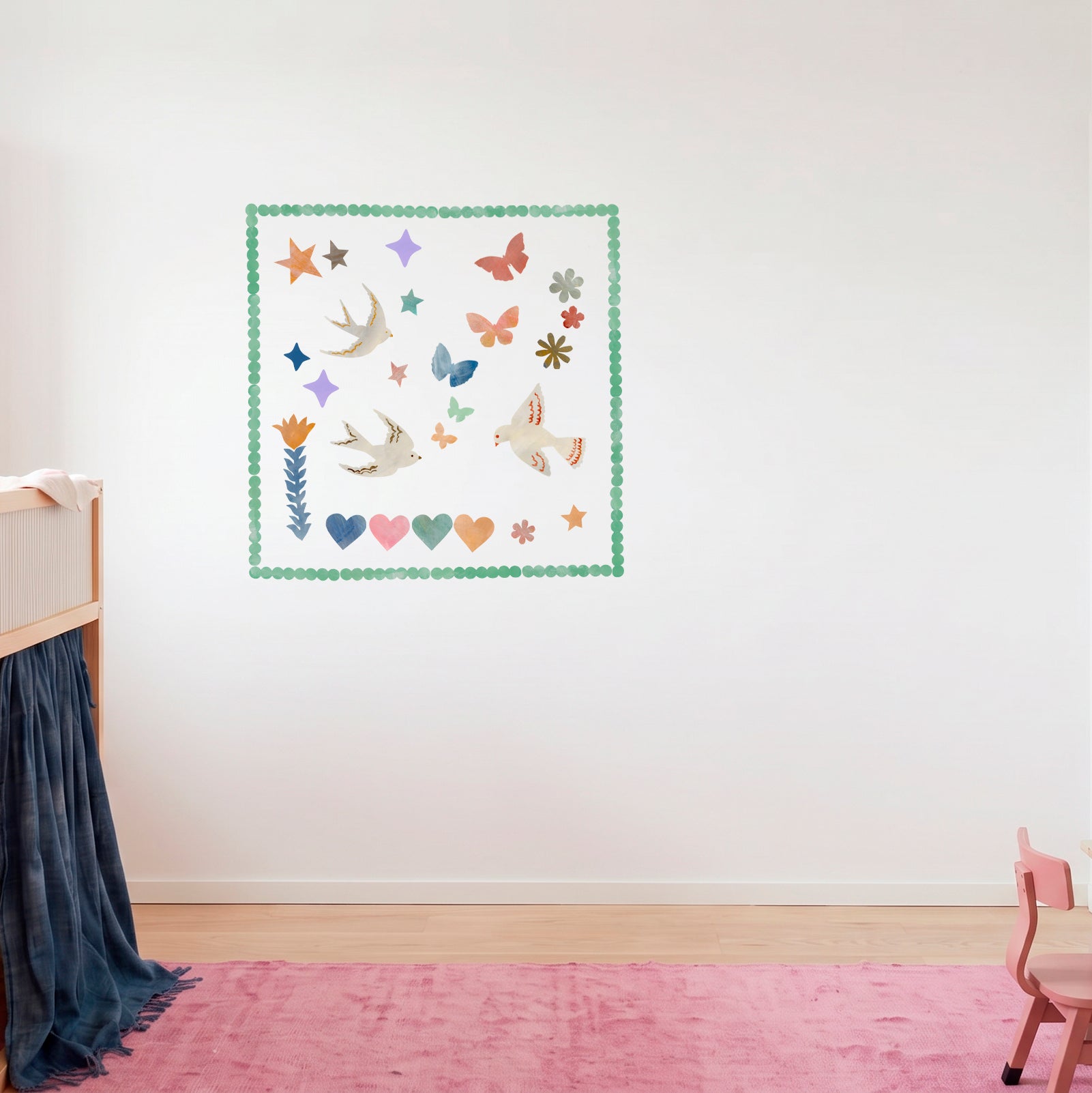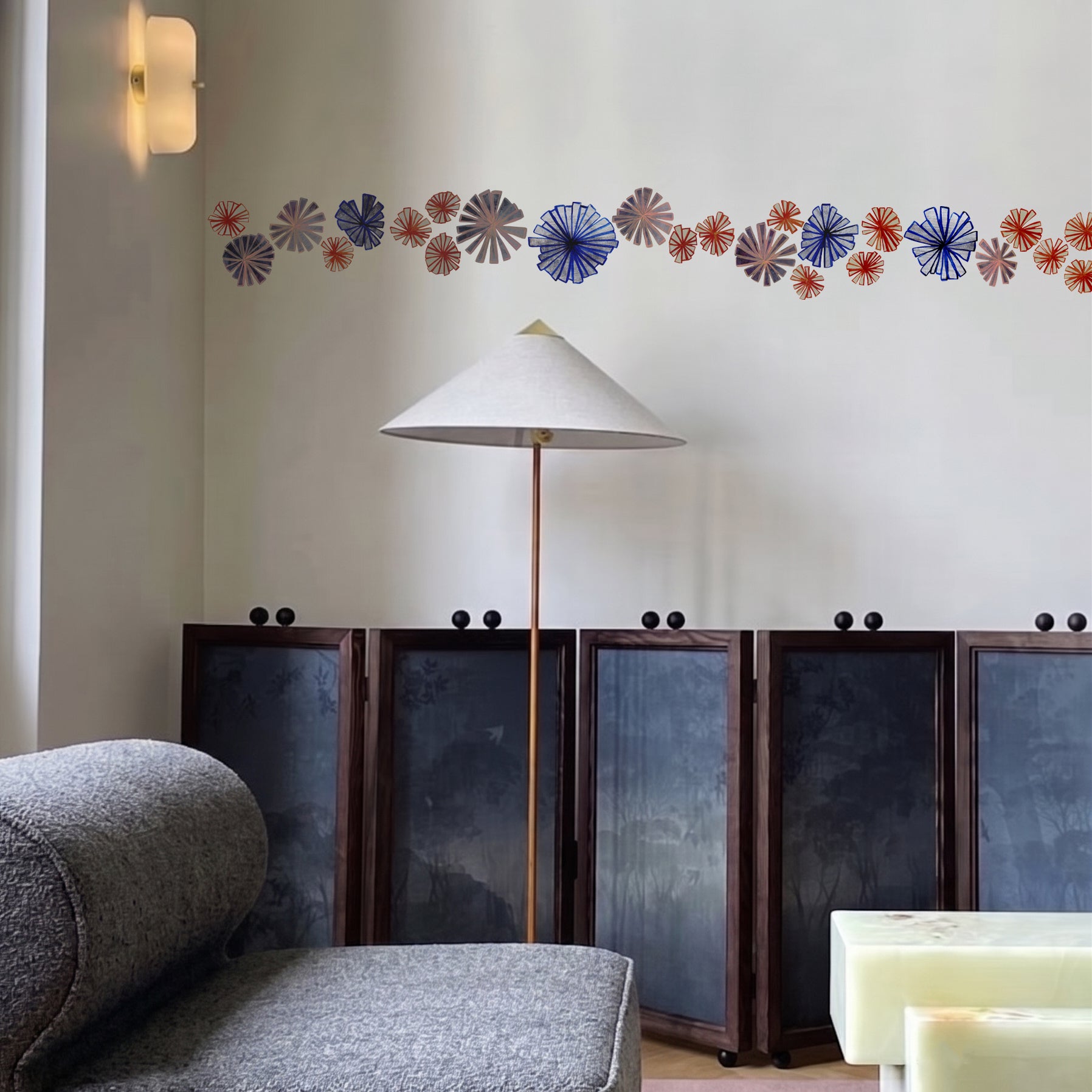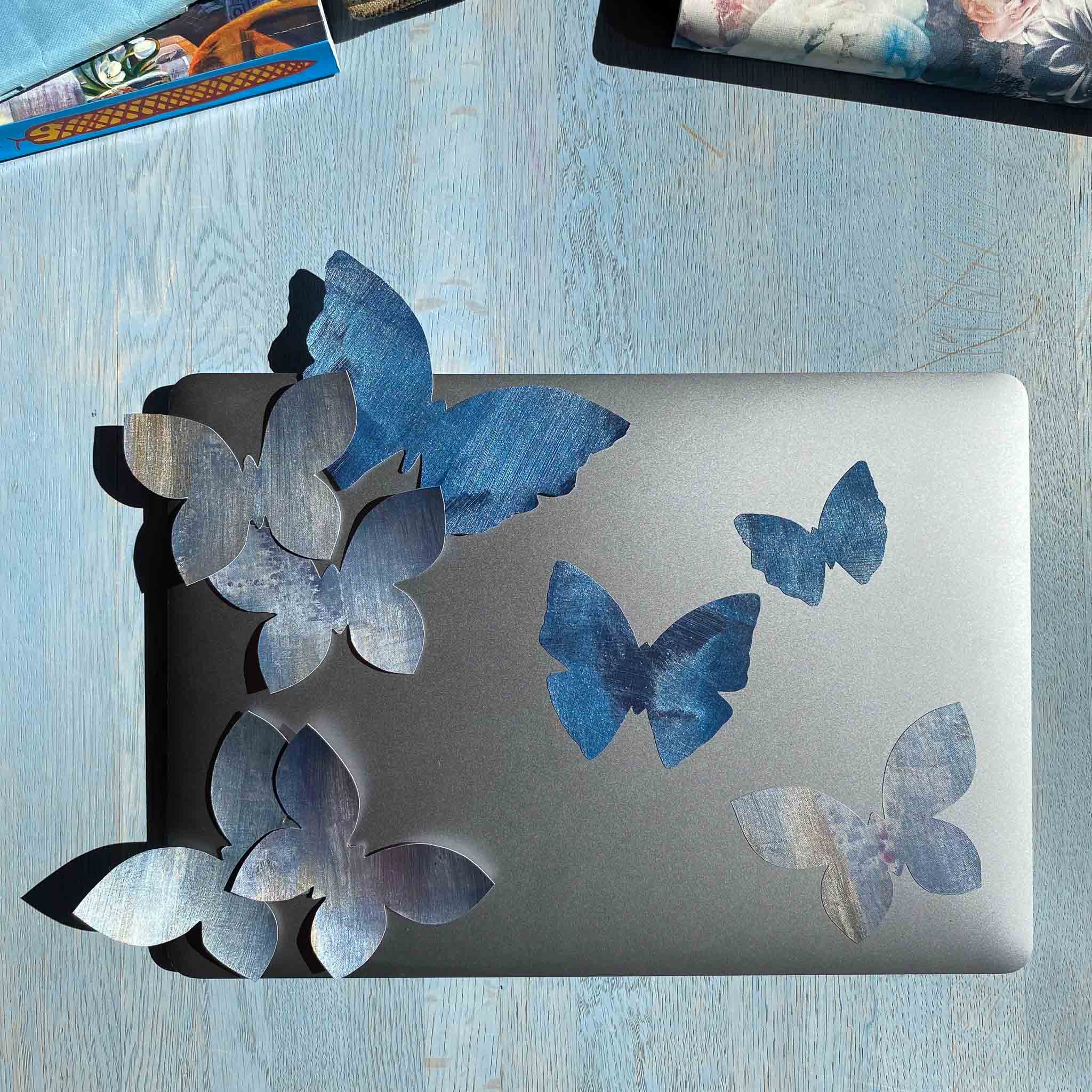
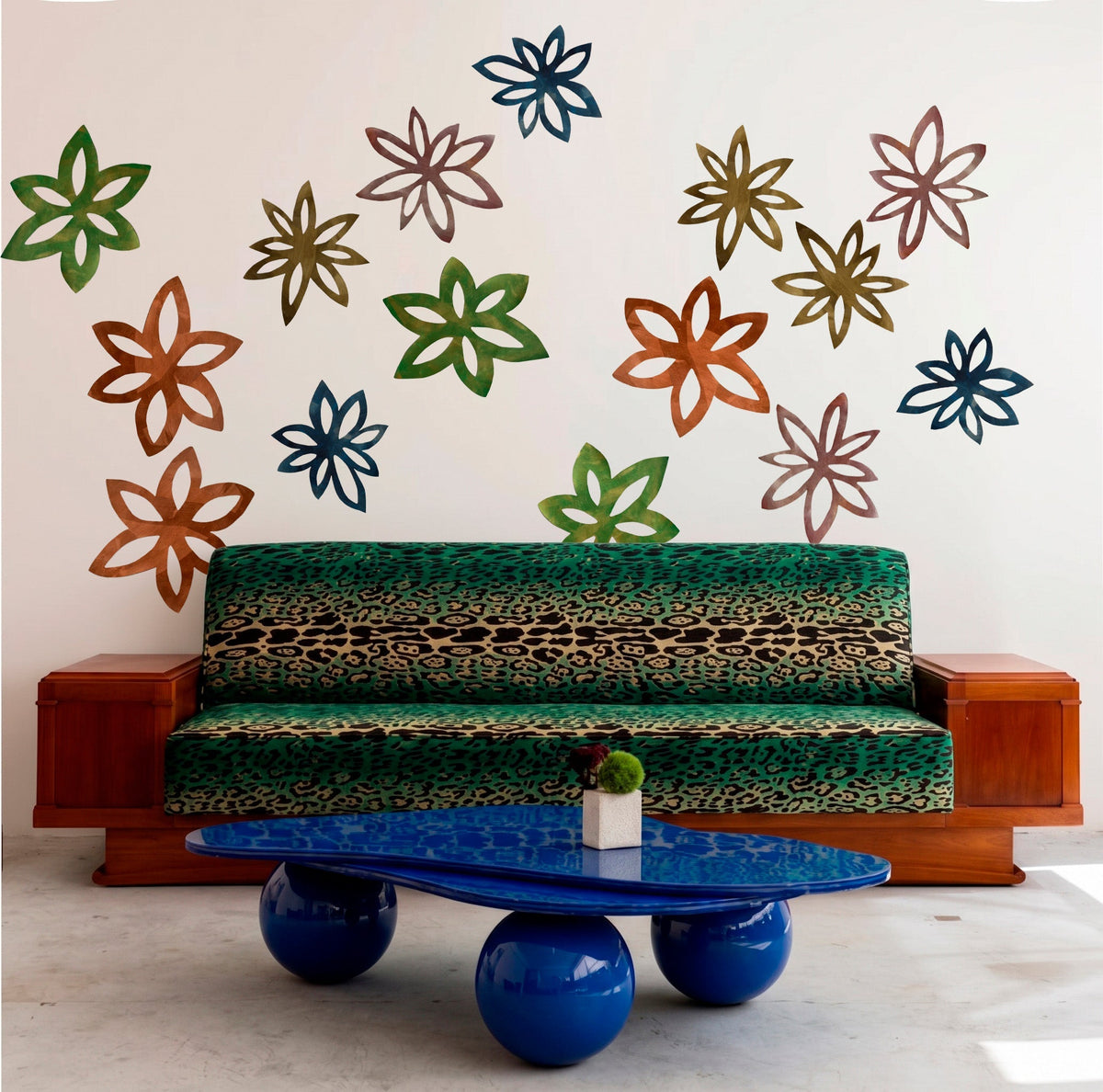
On a large wall, printed wallpaper starts to show its seams — literally. Every roll repeats a fixed pattern at a fixed interval, and once you're covering more than a couple of square metres, your eye finds that interval whether you're looking for it or not. Hand-painted wall decor doesn't have a repeat to find, because no two painted pieces are identical to begin with.
The real difference is repetition, not "quality"
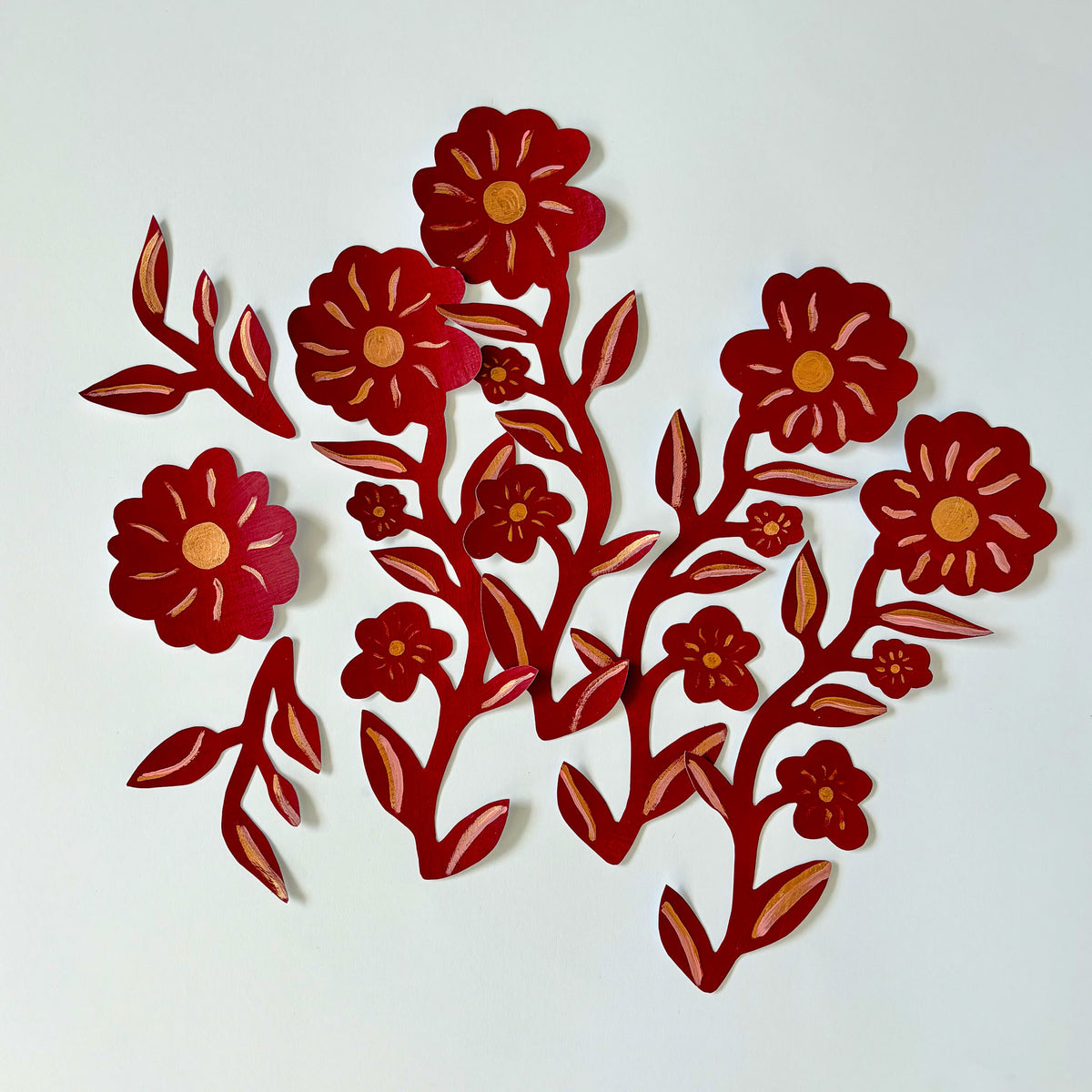
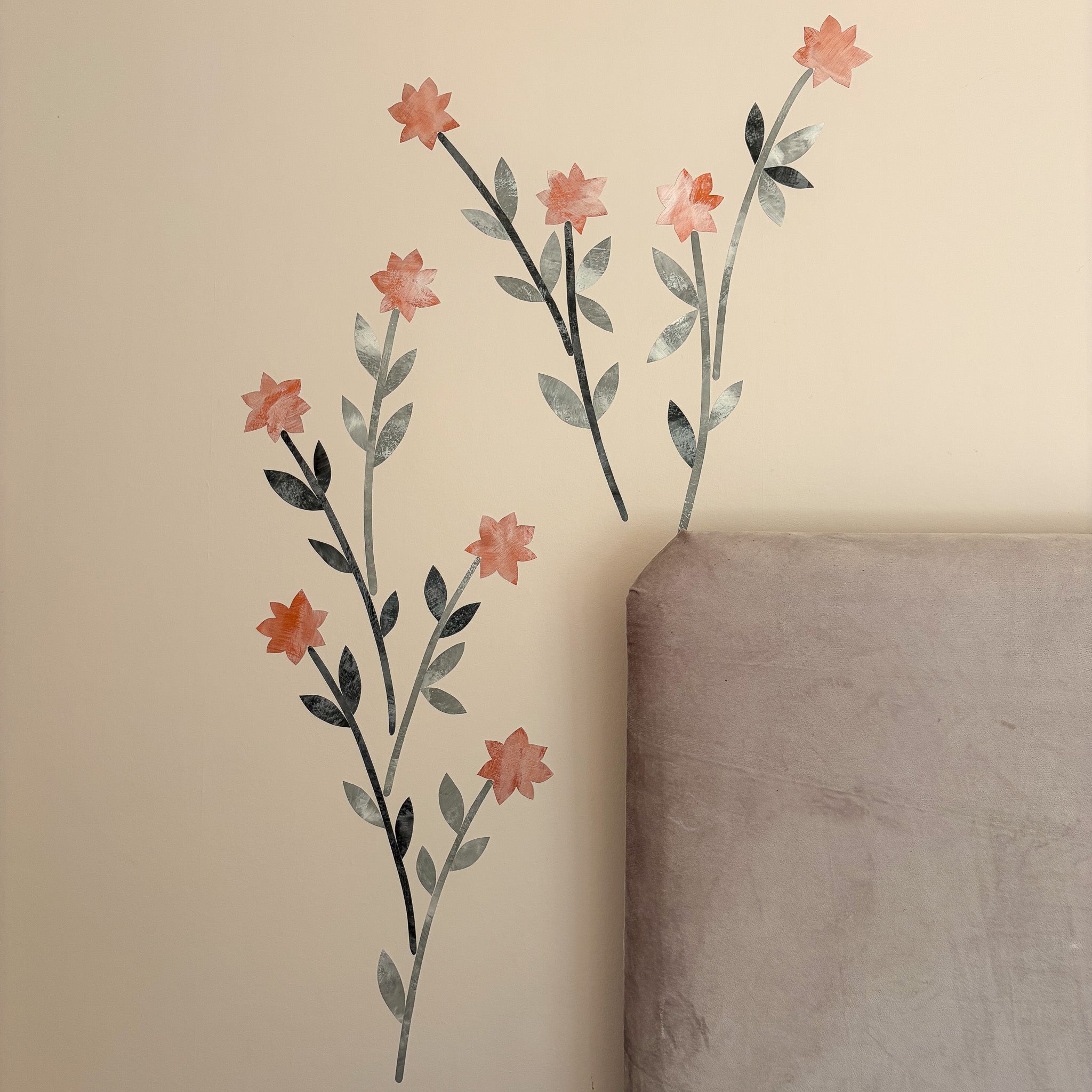
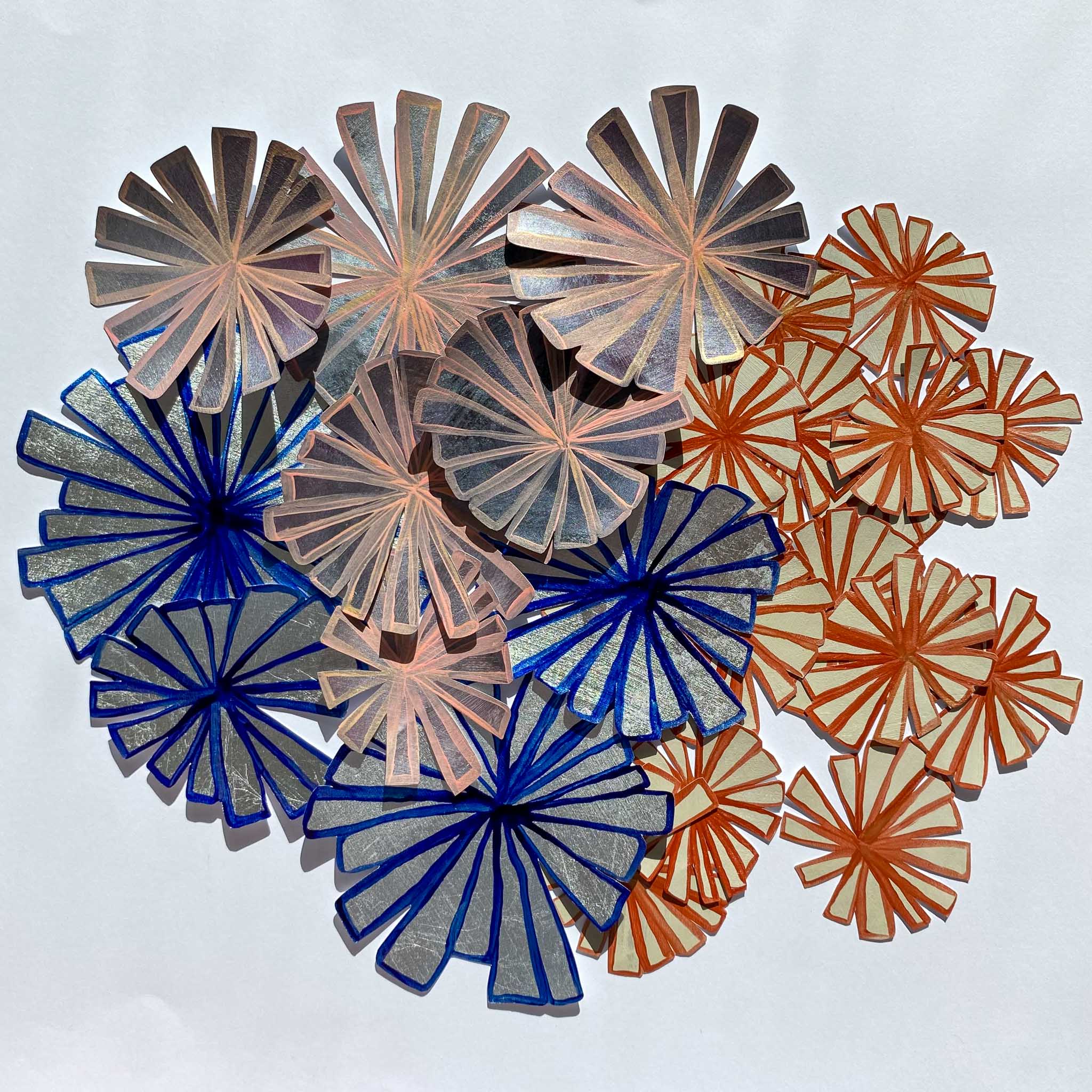
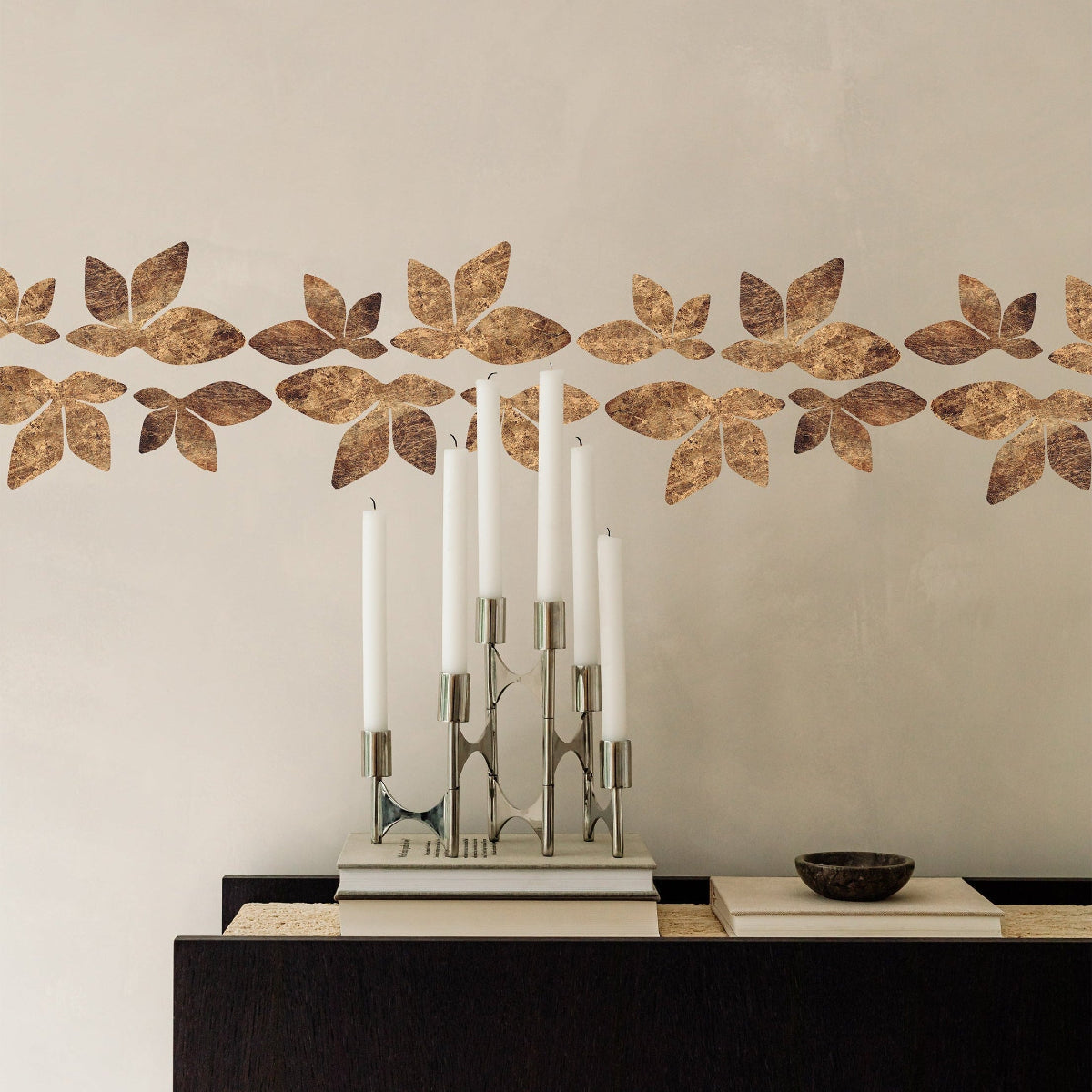
Our hand-painted pieces have brushstrokes, paint thickness, and small variations in shape that differ from piece to piece — even within the same design. They catch the light differently and subtly, and the wall reads as warmer and more alive.
What hand-painted texture actually looks like up close
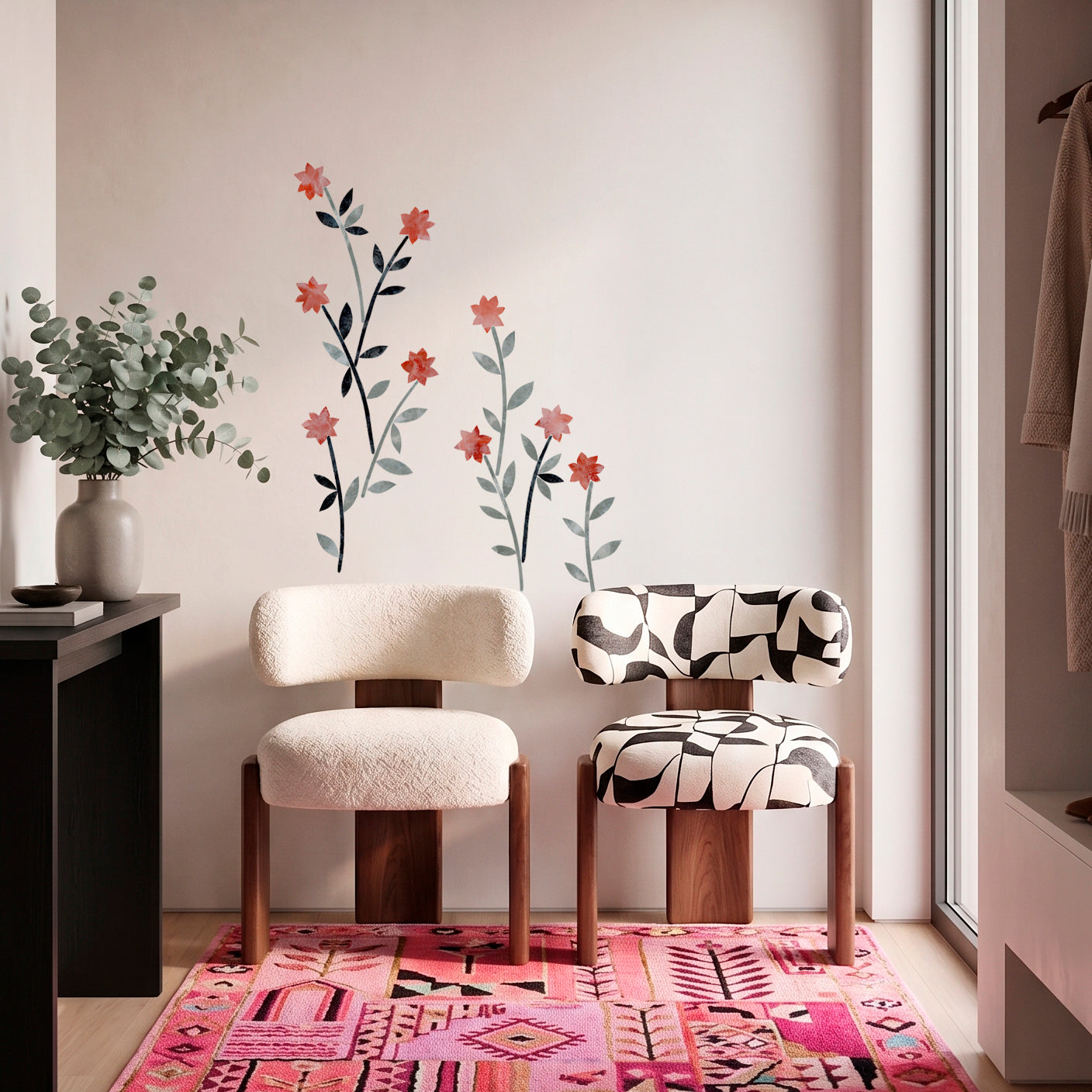
Because real paint sits on the surface in layers, it catches light differently than a flat digital print does. Multiple thin coats of paint build up a slight physical depth you can see change as you walk past the wall — something a single ink pass on a printed roll can't replicate. Tonka Papers' murals are a useful example of what that looks like in practice: each motif is hand-painted separately and then arranged as one composition rather than printed as a repeating pattern.

Shop the look
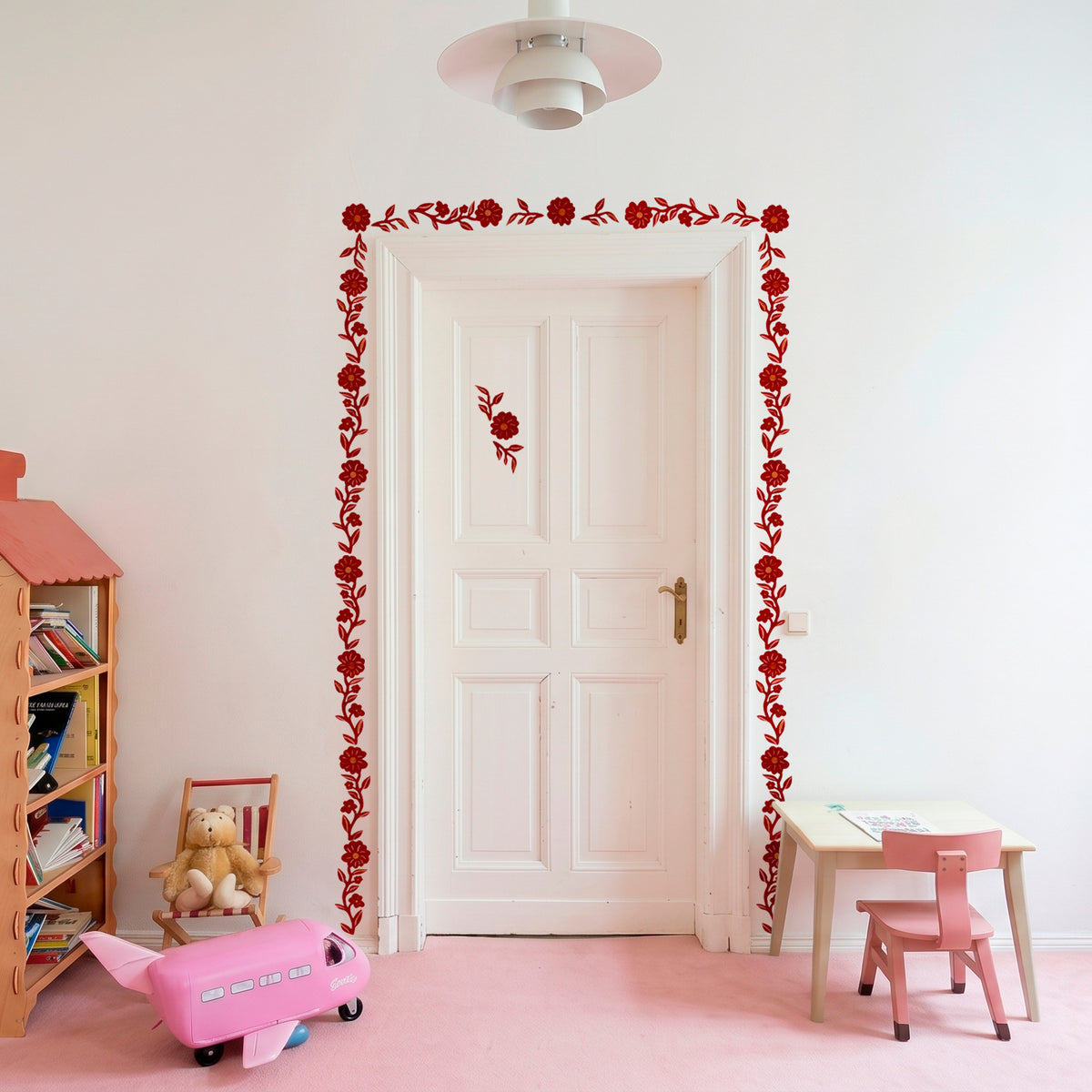
DAISY wallpaper border25 hand-painted daisy flowers with silver leaf metal — mounted closely, they form a 250cm wallpaper border — 900 DKK
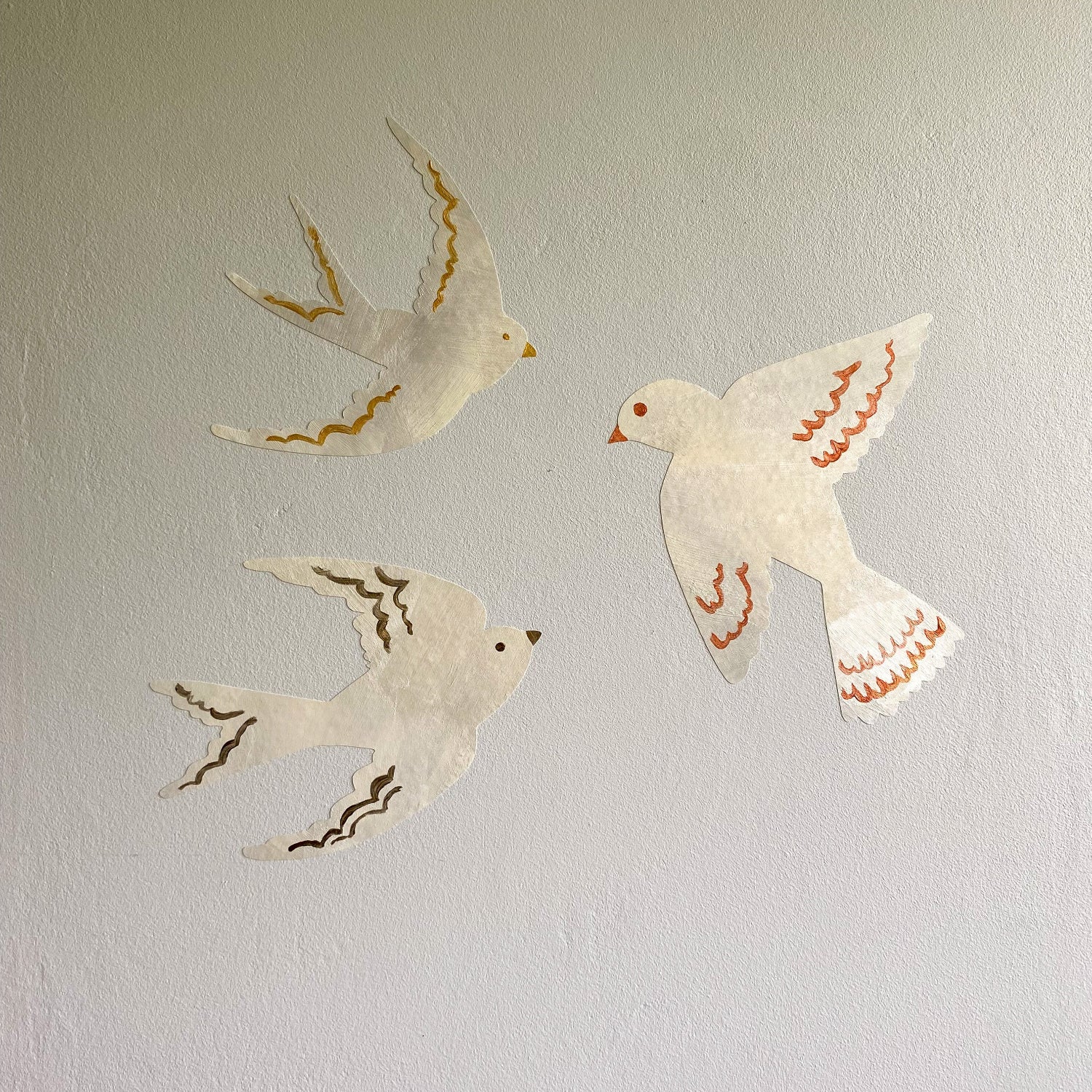
Notice that the product itself is a set of separate pieces, not a printed sheet. That's what lets you arrange them asymmetrically — clustering more birds on one side, leaving open wall space on the other.
When to choose which
Choose hand-painted, individually placed pieces when you want:
- A wallpaper border, accent, or feature wall rather than full coverage of every wall in the room
- A composition that looks natural and hand-painted
- Something removable — hand-painted peel-and-stick pieces come off cleanly, which a large printed installation generally doesn't
Choose printed wallpaper when you want:
- Uniform, edge-to-edge coverage across an entire large room